dar apie kuosas...
Atsitiktinai užtikau didelį ir įdomų Robin Hunicke tinklapį gewgaw...
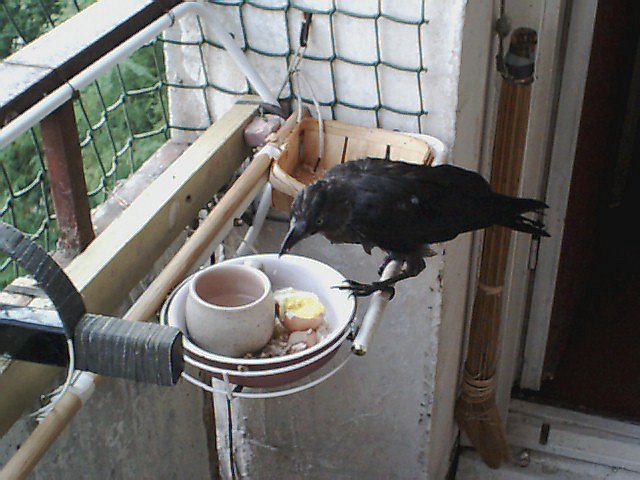
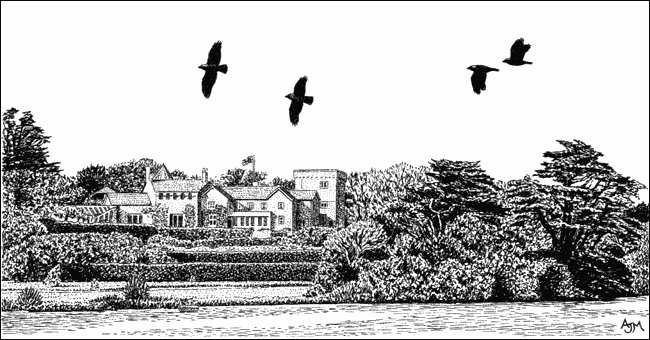
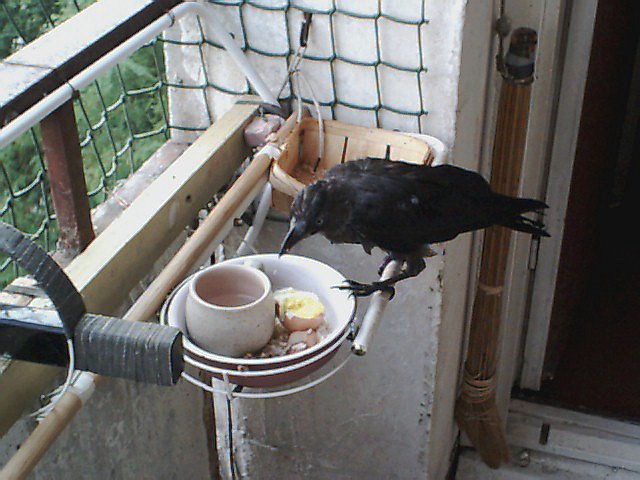
Čia radau cituojamas Nobelio laureato, austrų mokslininko gamtininko Konrad Lorenz 'o (1903-1989) knygos "Karaliaus Saliamono žiedas" (King Solomon’s Ring) teksto ištraukas apie kuosas. Apie tai, kad šie nepaprastai įdomūs mokslininko stebėjimai ir tyrimai buvo savo laiku man labai naudingi, jau minėjau skyrelyje Kuosia.
Jeigu įdomu, labai prašau:
Jeigu įdomu, labai prašau:
 "Recognition of the enemy - which in mallards and many other birds is an inborn instinct - must be learned personally by the young jackdaws. Learned through their own experience? No, more curious still: by actualy tradition, by the handing-down of personal experience from one generation to the next!
 Of all the reactions which, in the jackdaw, concern the recognition of an enemy, only one is innate: any living being that carries a black thing, dangling or fluttering, becomes the object of a furious onslaught. This is accompanied by a grating cry of warning whose sharp, metallic, echoing sound expresses, even to the human ear, the emotion of embittered rage. At the same time the jackdaw assumes a strange forward leaning attitude and vibrates it s half-spread wings. If you possess a tame jackdaw, you may, on occasion, venture to pick it up to put it into its cage, or perhaps, to cut its overgrown claws. But not, if you have two!
The blind reflex nature of this reaction became even clearer to me through a coincidental observation later that summer. One evening, as dusk fell, I returned from a swim in the Danube and, according to my custom, I hurried to the loft to call the jackdaws home and lock them up for the night. As I stood in the gutter, I suddenly felt something wet and cold in my trouser pocket into which, in my hurry, I had pushed my black bathing drawers. I pulled them out - and the next moment was surrounded by a dense cloud of raging, rattling jackdaws which hailed agonizing pecks upon my offending hand.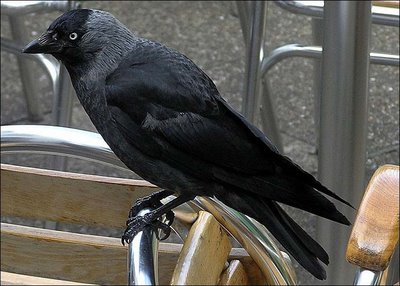
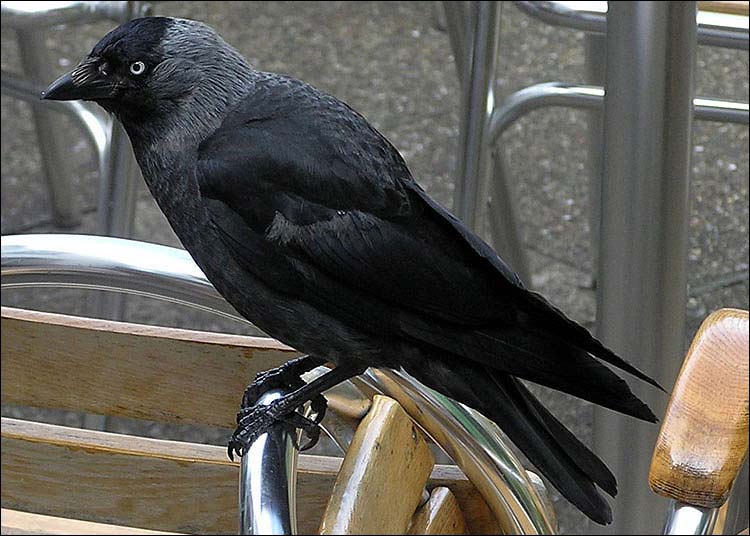
…After a typical rattling attack, the jackdaws are exceedingly mistrustful and hostile towards the person or animal which has given rise to it. This burning emotion stamps incrediby quickly into the bird’s memory an ineradicable picture which associates the situation “jackdaw in the jaws of the enemy", with the person of the plunderer himself. Provoke a jackdaw’s rattling attack two or three times running and you have lost its friendship for ever! From now on, it scolds as soon as it sees you, and you are branded, even when you are not carrying a black and fluttering object in your hands.
And further - this jackdaw will easily succeed in convincing all the others of your guilt. Rattling is exceedingly infectious and stimulates its hearers to attack as prompty as does the sight of the black fluttering object in the clutches of the “enemy". The “evil gossip” that you have once or twice been seen carrying such an object, spreads like wildfire, and, almost before you know it, you are notorious amongst the jackdaws in the whole district as a beast of prey which must at all costs be combated.
The original value of the “rattling reaction” is doubtless to rescue a comrade from a predatory animal, or, if this is impossible, to so harry the assailant that, filled with disgust, he will renounce the hunting of jackdaws forever. Even if a goshawk or other enemy were only slightly deterred by the rattling attack from hunting jackdaws, his ensuing preference for other prey would suffice to make the jackdaws’ reactoin of great value for the preservation of their species. This original function of the rattling reaction is well developed in all the members of the crow family, including those species that are less gregarious than the jackdaw: similar reactions can even be found in small song-birds." 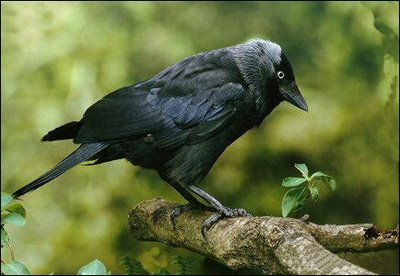

With the further development of social relations, particularly in the jackdaw, there arose in addition to the original significance of the “defence of kin reaction” a new and even more important meaning - that, through this behaviour, the recognition of a potential enemy can be communicated to the young and inexperienced birds. This is a real acquired knowledge, not a mere innate, instinctive reaction which is superficially similar to it.
I do not know if I have made it quite clear how very remarkable all this is: an animal which does not know its enemy by innate instinct, is informed by older and more experienced felow-members of its species who or what is to be feared as hostile. This is true tradition, the handing-down of personally acquired knowledge from one generation to another.
I do not know if I have made it quite clear how very remarkable all this is: an animal which does not know its enemy by innate instinct, is informed by older and more experienced felow-members of its species who or what is to be feared as hostile. This is true tradition, the handing-down of personally acquired knowledge from one generation to another.
…On the appearance of an enemy, as yet unknown to the young, and old guide jackdaw needs only to give one significant “rattle” , and at once the young birds have formed a mental picture associating the warning with this particular enemy. In the natural life of jackdaws, I think it seldom happens that an inexperienced young bird first receives knowledge of the dangerous character of an enemy by seeing him with a black dangling object in his clutches. Jackdaws nearly always fly in a dense flock, in whose midste there is, in all probability, at least one bird which will begin to “rattle” at the merest sight of an enemy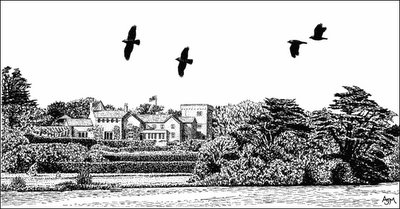 .
.
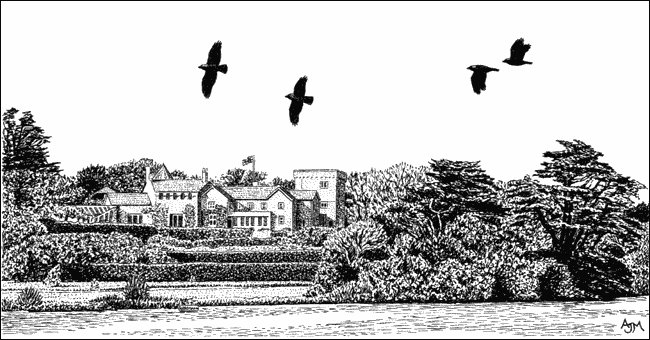 .
.How very human this is! On the other hand, how remarkably blind and reflex-like is the innate perceptual pattern which in the inexperienced young jackdaws provokes a typical “rattling attack"! But have not we human beings also such blind, instinctive reactions? Do not whole peoples all too often react with a blind rage to a mere dummy presented to them by the artifice of the demagogue? Is not this dummy in many cases just as far from being a real enemy as were my black bathing drawers to the jackdaws? And would there still be wars, if all this were not so?
Konrad Lorenz, on the behavior of birds and men, in the incredibly charming and thought-provoking King Solomon’s Ring
Konrad Lorenz, a Nobel Laureate in animal behavior, here concentrates his vast learning on the animals most closely bound to humankind--dogs and cats. With wisdom and humor he discusses dogs and children, dogs' relationship to human language, canine and feline relationships, and much more. Over 100 line drawings.
posted by algimantas at 7:18 popiet
0 comments